water treatment

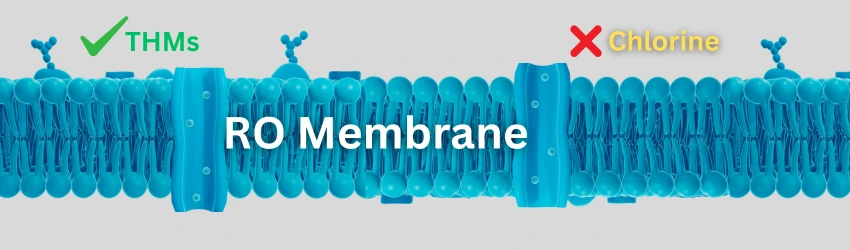
The Hidden Danger: Why Chlorine Harms RO Membranes, but THMs Don’t

Listen To This Post ! Chlorine compounds can be harmful to reverse osmosis (RO) membranes. Chlorine, in particular, is highly oxidative and can degrade the polyamide layer of most RO membranes, leading to reduced performance and membrane damage over time. That’s why pretreatment steps are often used to remove chlorine (e.g., with activated carbon filters […]

The Hidden Danger: Why Chlorine Harms RO Membranes, but THMs Don’t Read More »
THMs: The Chlorine Byproduct Threat, and How to Get Rid of Them

THMs: The Chlorine Byproduct Threat, and How to Get Rid of Them Trihalomethanes (THMs) are a category of chemical substances which are by-products of the disinfection procedure used in the water treatment, and they are mainly formed when chlorine-based disinfectants react with natural organic matter (NOM) found within the water matrix. The reason why these

THMs: The Chlorine Byproduct Threat, and How to Get Rid of Them Read More »

Halo acetic acids

Halo acetic acids (HAAs): The Chlorine Byproduct Threat, and How to Get Rid of Them

Halo acetic acids (HAAs): The Chlorine Byproduct Threat, and How to Get Rid of Them Haloacetic acids (HAAs) are another group of disinfection by-products (DBPs) that form when chlorine or other halogen-based disinfectants react with natural organic matter (NOM) in water. Like trihalomethanes (THMs), HAAs are regulated due to their potential health risks, including carcinogenicity

Halo acetic acids (HAAs): The Chlorine Byproduct Threat, and How to Get Rid of Them Read More »

Scroll to Top