
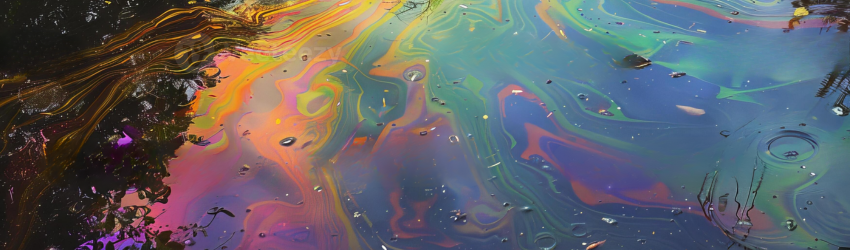
The rainbow ripple effect seen on the surface of water is a common phenomenon that indicates the presence of certain contaminants, often oil, grease, or other hydrocarbon-based substances. This iridescent, rainbow-like sheen is primarily caused by the interference of light waves as they reflect off a thin layer of oil or other materials floating on the water’s surface. Let’s break down this phenomenon and its implications:
1. The Cause of the Rainbow Effect
- Thin Film Interference: The rainbow colors seen in the ripple effect are due to a process known as thin-film interference. When a thin layer of a substance like oil or grease floats on the surface of the water, light that hits this layer is both reflected and refracted (bent) as it passes through the oil and interacts with the water below.
- Some of the light waves bounce off the top of the oil layer, while others travel through the oil, hit the water surface, and reflect back. When these waves meet, they interfere with each other, either amplifying or canceling certain wavelengths of light. This creates the rainbow effect with different colors appearing based on the thickness of the oil film and the angle of the light.
- Why a Rainbow? The colors in the rainbow ripple depend on the thickness of the oil or contaminant film. Thinner films often show more vibrant colors, while thicker layers can appear darker or more monochromatic. The phenomenon resembles the colors seen in soap bubbles or on the surface of a CD due to similar interference effects.
2. Indications of Oil and Grease
- Oil-based Contaminants: The most common cause of the rainbow sheen on water is oil. This could be from motor oils, gasoline, or industrial oils that have leaked into the water. These substances are hydrophobic (water-repelling) and float on the water’s surface, spreading out into a thin layer, which is why the rainbow pattern can cover a large area.
- Source of Oil Contamination: Oil can enter water bodies through various pathways such as stormwater runoff, oil spills, improper disposal of industrial waste, or even leakage from vehicles and machinery.
- Example: After a rainstorm, you may see this effect near roads or parking lots where vehicles have leaked small amounts of oil that are washed into nearby water bodies.
- Grease: Similar to oil, grease from food waste or industrial processes can also create a thin film on water surfaces, causing a similar rainbow effect. This is often seen in urban stormwater systems.
3. Organic vs. Inorganic Contamination
- Organic Contamination: Oil and grease are organic compounds, primarily made up of hydrocarbons. These contaminants are biodegradable to some extent but can take a long time to break down, especially in large quantities. They can severely affect water quality by suffocating aquatic life (preventing oxygen exchange) and harming ecosystems.
- Impact on Aquatic Life: The thin oil film blocks oxygen exchange between the water and air, which can suffocate fish and other organisms. The hydrocarbons in oil can also be toxic to aquatic organisms, leading to long-term environmental damage.
- Environmental Persistence: While organic, oil and grease persist in the environment due to their slow degradation rate. Some compounds in oil (like polycyclic aromatic hydrocarbons or PAHs) are particularly harmful and carcinogenic.
- Inorganic Contamination: Inorganic pollutants, such as heavy metals (lead, mercury) or chemicals (acids, detergents), do not typically create this rainbow ripple effect because they dissolve or behave differently in water. The rainbow effect specifically indicates the presence of oil-like organic materials rather than inorganic contamination.
4. Other Possible Causes of the Rainbow Effect
While oil and grease are the most common causes, other materials can sometimes create similar effects:
- Surfactants: Some detergents and cleaning agents contain surfactants that can form thin layers on water and mimic the rainbow sheen. These surfactants break down oil and grease, but in high concentrations, they can create their own interference patterns.
- Algal Sheens: Although rare, certain organic films produced by natural processes like algal blooms can create a faint iridescence on the water surface. However, these sheens tend to be less vibrant and more diffuse than oil sheens.
5. Distinguishing Between Oil and Other Contaminants
- Oil Sheen Test: A simple field test to check if the rainbow effect is due to oil is the stick test. If you gently touch the surface of the water with a stick and the film breaks apart into fragments rather than spreading out, it’s most likely an oil-based substance.
- Odor and Consistency: Oil and grease often have a distinctive odor (especially petroleum products). Additionally, oil sheens tend to feel slick or greasy when touched, unlike films caused by natural processes.
6. Environmental and Health Implications
- Water Quality: The presence of oil and grease in water bodies can severely degrade water quality. These substances reduce water clarity, impair aquatic ecosystems, and make water unsafe for human use, whether for drinking, recreation, or fishing.
- Health Risks: Oil contamination can be hazardous to human health, especially if it reaches drinking water sources. Long-term exposure to hydrocarbons in water is linked to cancer, liver damage, and other health issues.
- Regulatory Concerns: Governments often monitor water bodies for oil and grease levels, especially near industrial areas, ports, and urban centers. Cleanup efforts for oil spills, even minor ones, are crucial to prevent long-term environmental damage.
In summary
The rainbow ripple effect on the surface of water is a strong indicator of oil or grease contamination, typically from hydrocarbons. This phenomenon occurs due to the thin-film interference caused by the oil layer, which reflects and refracts light in different wavelengths, producing the rainbow-like appearance. While this effect is most commonly associated with organic pollution from oil, other substances like detergents or algae can sometimes produce similar, though less vibrant, effects. The presence of such contamination not only affects water aesthetics but also poses serious threats to aquatic life and water quality.